Choosing the right Led Facial Mask requires more than comparing sleek designs and glowing advertisements. A mask may look impressive, yet deliver weak or poorly documented light. The better choice begins with clear wavelengths, measured intensity, treatment time, comfort, and eye protection. Red light is commonly selected for visible signs of aging, while near-infrared light may reach deeper tissue. However, specifications vary between brands. Marketing language can sound more certain than the evidence.
Dr. Dennis Gross, a dermatologist and LED skincare specialist, has described LED therapy as “non-invasive, gentle, and effective for all skin types.” That statement offers useful context, not a universal guarantee. Skin can react differently. Some users notice a brighter appearance after several weeks, while others see little change. A professional evaluation matters when persistent acne, redness, pigmentation, or sensitivity is involved. Do not ignore discomfort.
The best Led Facial Mask should fit evenly across the face, sit close to the skin, and allow consistent sessions. Check whether the manufacturer explains wavelength ranges, irradiance, testing, cleaning instructions, and expected results. Reputable brands should provide safety information and relevant regulatory documentation for their market. User reviews can reveal practical details, such as tight straps, heat around the nose, or difficult controls. Those details matter.
There is no perfect mask.
A reflective point remains important: stronger light is not automatically better. Longer sessions may also create irritation instead of faster results. A thoughtful buyer balances technical evidence with personal tolerance, medical advice, and realistic expectations. This guide examines those decisions closely, helping readers choose a device that is credible, comfortable, and suitable for regular use.
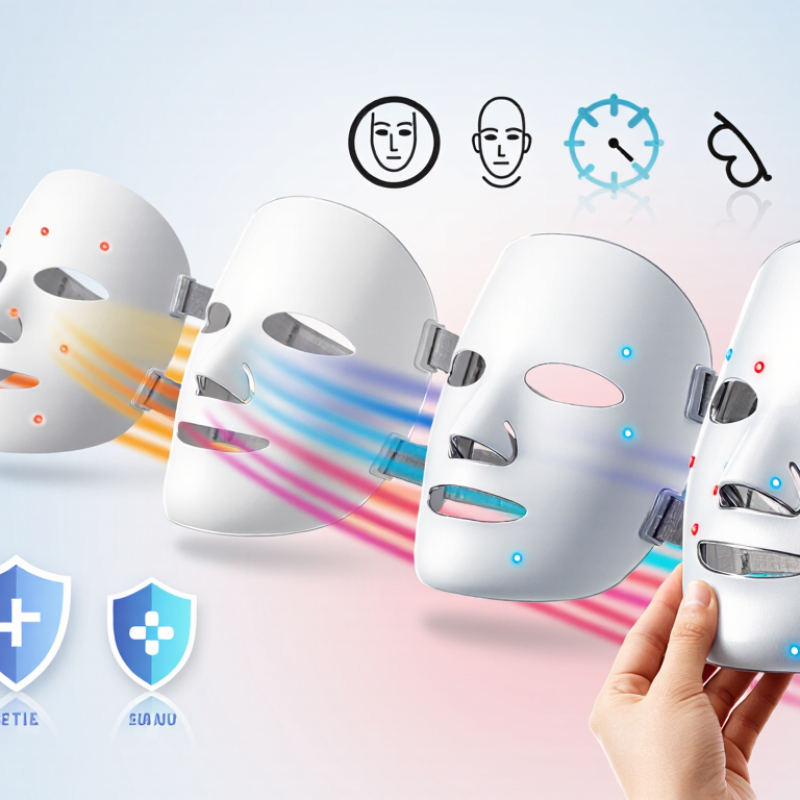
Start with one clear skin goal. Red light may support collagen-related concerns and visible redness. Blue light is commonly studied for mild to moderate acne. The American Academy of Dermatology estimates that acne affects up to 50 million Americans annually. However, an LED mask is not a replacement for diagnosis or prescribed care. Results usually develop gradually, not after one glowing session.
Check the device’s wavelength, treatment time, and irradiance. Published dermatology reviews generally report better evidence for acne support than dramatic wrinkle removal. The FDA also distinguishes cleared devices from treatments proven for every cosmetic claim. That difference matters. I would question any promise of instant lifting. Skin response varies with tone, sensitivity, medication, and consistency. Eye protection deserves equal attention, especially with bright blue light.
Tips: Photograph your face before treatment, using the same window and distance. Follow the stated schedule for at least eight weeks. Stop if you notice burning, swelling, or persistent dryness. Avoid guessing when using photosensitizing medication; ask a dermatologist first. A useful buying mistake to avoid is choosing the strongest-looking light. More intensity does not automatically mean better skin. Review the specifications, warranty, cleaning instructions, and independent clinical evidence before paying.
How to Choose the Best LED Facial Mask?
LED facial masks work through specific wavelengths, not color alone. Red light, commonly around 630–660 nanometers, may support collagen production and reduce the look of fine lines. It can also calm visible redness. Near-infrared light, often between 810–850 nanometers, reaches deeper tissue and may support skin recovery. The effects are gradual.
Blue light usually sits near 405– blue 430 nanometers. It may help reduce acne-causing bacteria and manage mild breakouts. However, blue light can feel drying for some people. Amber or yellow light is often marketed for dullness and uneven tone, but its evidence is less consistent. I would not treat a bright color chart as scientific proof.
Look beyond the mask’s color. Check its wavelength range, treatment time, light intensity, and safety instructions. A reliable device should clearly explain eye protection and suitable skin types. Use it on clean, dry skin, then apply a simple moisturizer. Avoid adding several strong products during the same session. That makes irritation harder to understand.
Start with short sessions. Watch for heat, stinging, or unusual redness. Stop if discomfort continues. Results vary with age, pigmentation, acne severity, and daily sun exposure. I find this part easy to underestimate. More light is not automatically better, and consistent use may matter more than dramatic claims. People with photosensitive conditions or medications should ask a qualified healthcare professional before treatment.
| LED Color | Typical Wavelength | Approximate Skin Reach | Main Skin Benefit | Best Suited For | Evidence and Safety Notes |
|---|---|---|---|---|---|
| Blue | Approximately 415–470 nm | Primarily superficial epidermal layers | May help reduce acne-causing bacteria and calm some inflammatory acne lesions | Mild to moderate inflammatory acne | Use eye protection when recommended. Blue light is not a complete treatment for severe or cystic acne and may cause temporary dryness or irritation. |
| Red | Approximately 620–700 nm; commonly 630–660 nm | Generally deeper than blue light, within superficial dermal tissue | May support cellular activity, reduce visible redness, and promote a smoother-looking complexion | Fine lines, mild redness, dullness, and overall skin maintenance | Clinical outcomes depend on wavelength, dose, treatment frequency, and device design. Results are usually gradual rather than immediate. |
| Near-Infrared | Approximately 780–1,000 nm; commonly 810–850 nm | Typically penetrates deeper than visible red light | May support tissue recovery, reduce the appearance of inflammation, and complement red-light treatments | Signs of photoaging, temporary redness, and post-treatment skin recovery | Near-infrared light is invisible, so brightness is not an indicator of output. Follow the manufacturer’s exposure guidance and avoid excessive heat. |
| Yellow or Amber | Approximately 570–595 nm | Superficial to moderate penetration | May help improve the appearance of temporary redness and uneven tone | Sensitive-looking, dull, or uneven skin | Evidence is more limited and less consistent than for red, near-infrared, and blue wavelengths. It should not be promoted as a treatment for pigmentation disorders. |
| Green | Approximately 495–570 nm; commonly 520–550 nm | Mostly superficial skin layers | Marketed for tone-evening and calming effects, but clinical support remains limited | People seeking a gentle, supplementary skincare option | Do not rely on green light alone for melasma, hyperpigmentation, or other diagnosed conditions. Professional assessment may be needed. |
| Multi-Color Combination | Usually combines two or more wavelengths, such as blue, red, and near-infrared | Depends on the wavelengths used | Can target more than one concern, such as acne-prone skin and visible signs of aging | Users with multiple skincare goals | Check whether each mode has a clearly stated wavelength, irradiance, treatment time, and safety guidance. More colors do not automatically mean better results. |
Choosing the best LED facial mask starts with design, not color claims. A rigid shell may hold LEDs evenly, but it can press against the nose and cheeks. Flexible silicone usually follows facial contours better. However, flexibility may create small gaps near the jawline. Coverage matters there.
Check whether light reaches the forehead, cheeks, chin, and sides of the nose. A 2023 systematic review in Dermatologic Surgery found that red and near-infrared photobiomodulation showed potential for improving skin aging signs, but study methods varied widely. That limitation matters. More LEDs do not automatically mean better treatment. Ask for measured wavelength, irradiance, and treatment distance.
Comfort affects consistency. The Global Wellness Institute’s 2024 report valued the wellness economy at about 6.3 trillion dollars in 2023, but spending data cannot prove a device works. Choose a mask that feels light after ten minutes, stays secure without tight straps, and does not trap excessive heat. Eye protection should feel stable, not improvised.
Treatment settings need restraint. Look for clearly labeled red, near-infrared, or blue-light modes, plus fixed timers. Higher intensity is not always safer. My first choice might favor maximum coverage, yet a heavy mask could remain unused in a drawer. That is a real design failure. Start with the manufacturer’s schedule, photograph skin under similar lighting, and reassess after several weeks. Stop if irritation persists.
How to Choose the Best LED Facial Mask?
Safety should guide your LED facial mask choice, not brightness or appearance. Look for clear electrical safety information and relevant certifications for your country. A trustworthy seller should provide testing details, not vague claims. Check whether the device meets recognized photobiological safety standards, such as IEC 62471. Certification labels alone are not enough. Verify the certificate number when possible. I once focused too much on treatment colors and ignored eye protection. That was a poor decision.
Read the usage requirements carefully. The instructions should state treatment time, recommended frequency, charging steps, and cleaning methods. A mask that feels hot, pinches your nose, or leaves red marks may not suit you. Stop using it if you notice persistent irritation, pain, or vision changes. People with light-sensitive conditions or medications should ask a qualified healthcare professional first. Results also depend on consistent use. More sessions do not always mean better skin.
Tips: Choose adjustable straps and comfortable eye coverage. Inspect the cable, casing, and charging port before each use. Keep the surface clean with a suitable wipe, but avoid soaking the device. Save the manual and warranty information. Independent clinical evidence is useful, yet small studies may not predict your results. Take monthly photos in the same lighting. Your expectations may need adjustment.
Check the device’s stated wavelength, safety documentation, certifications, eye-protection guidance, and required treatment time before purchase.
Common target wavelengths: Blue light around 415 nm is commonly used in acne-focused devices, red light around 633 nm is widely used for photobiomodulation, and near-infrared light around 830 nm is commonly used for deeper light penetration. Actual performance depends on irradiance, treatment time, distance from the skin, and device design.
When choosing an LED facial mask, inspect quality before chasing discounts. A 2024 Grand View Research report projected the global LED light therapy market to grow at about 10.6% annually through 2030. Fast growth increases choice, but it also rewards careful checking. Look for clearly stated wavelengths, treatment time, irradiance, and eye-protection guidance. Vague specifications are a warning sign. The device should reference recognized safety testing, such as IEC 62471 photobiological assessment.
Cost includes more than the checkout price. Check whether the package contains a charger, protective eyewear, straps, and replacement parts. A low-priced mask may become expensive when its battery or controller fails. Warranty length matters, but read the exclusions. Does coverage include charging faults, cracked silicone, and reduced battery performance? Keep the receipt and record the purchase date. Small details matter.
Maintenance should fit real life. Wipe the mask with a manufacturer-approved, non-abrasive cleaner after use. Do not soak electronic components. Store it away from direct heat and tightly folded cables. The 2023 Global Wellness Institute Monitor valued the global wellness economy at $6.3 trillion in 2022, showing strong consumer demand, not proof that every device works well. That distinction is easy to miss. My checklist is imperfect, too; comfort, fit, and consistent use can matter as much as technical figures. A device left in a drawer has no practical value.
Choose one clear goal, such as mild acne, visible redness, or fine lines. Results take time. Avoid expecting one glowing session to change your skin.
Blue light, often around 405–430 nanometers, may help manage acne-causing bacteria. It can feel drying for some people. Use caution if your skin becomes tight or flaky.
Red light, usually around 630–660 nanometers, may support collagen-related skin concerns. It may also calm visible redness. The effects are gradual, not dramatic overnight.
Near-infrared light often ranges from 810–850 nanometers. It may reach deeper tissue and support skin recovery. Evidence and personal results can vary.
Not necessarily. More intensity does not automatically mean better skin. Check the wavelength, treatment time, intensity, and safety instructions instead.
Clean and dry your face before treatment. Afterward, apply a simple moisturizer. Avoid combining several strong products during the same session. Keep it simple.
Follow the device’s stated schedule consistently for at least eight weeks. Take photographs near the same window and from the same distance. This makes changes easier to judge, although photos are imperfect.
Stop if you notice burning, swelling, persistent dryness, or unusual redness. Start with short sessions and monitor your skin carefully. Discomfort should not be ignored.
People with photosensitive conditions or photosensitizing medications should ask a qualified professional first. Eye protection also matters, especially with bright blue light. I would not guess here.
Choosing the best Led Facial Mask starts with identifying your personal skincare goals and setting realistic expectations for LED therapy. Consider whether you want to support a clearer complexion, smoother-looking skin, improved radiance, or a more even appearance. Then learn how different LED wavelengths and colors are commonly used, as each option may serve a different skincare purpose. Understanding treatment modes, recommended session times, and consistency will help you select a device that fits your routine.
Next, compare the mask’s design, facial coverage, comfort, fit, and available settings. A practical device should be easy to use and include essential safety features, clear instructions, and appropriate certifications for its intended market. Also evaluate build quality, price, warranty coverage, cleaning requirements, battery or power needs, and long-term maintenance. By balancing treatment goals, usability, safety, and overall value, you can choose a Led Facial Mask that suits your lifestyle and supports a consistent skincare routine.

To verify authenticity, request the certificate number from our team and check it on the issuing body's official portal. Contact us