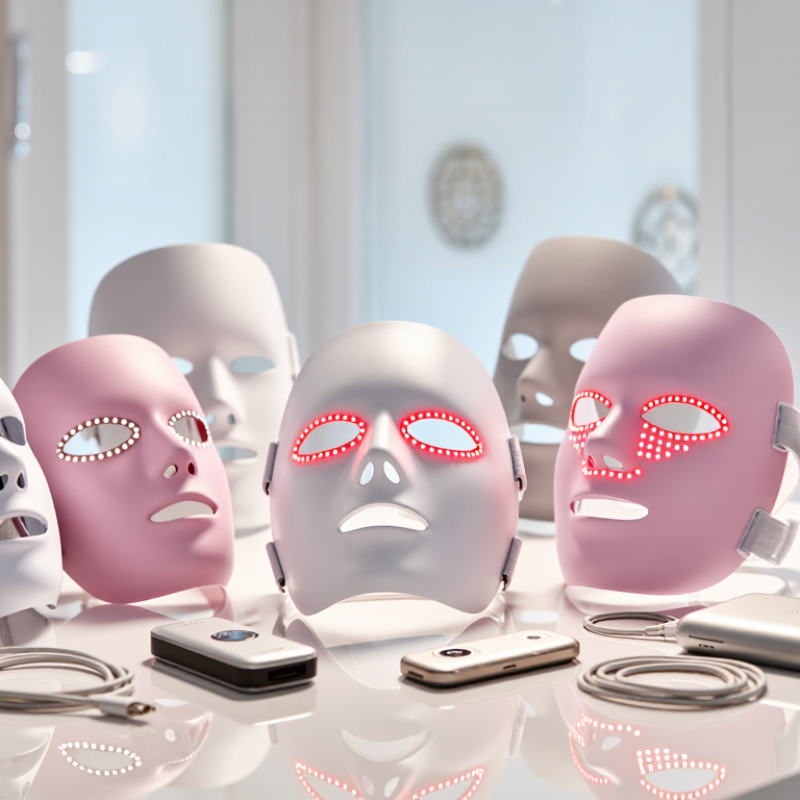
2026 Top Red Light Masks What Global Buyers Need to Know?

Time:2026-10-21 Author:Ethan
0%

The 2026 market for Red Light Mask devices is becoming more competitive, technical, and difficult to compare. Global buyers now face hundreds of similar-looking products, yet their internal specifications can differ significantly. A flexible silicone mask may feel comfortable, while another model may create pressure around the nose, cheeks, or eyes. Small design details often affect real-world use.

Reliable purchasing requires more than attractive packaging or impressive light counts. Buyers should examine wavelength ranges, irradiance, treatment time, battery performance, eye protection, material quality, and testing records. Independent laboratory reports can offer stronger evidence than supplier claims. Regulatory expectations also vary between markets, so documentation should be reviewed for the target country. CE, UKCA, FDA-related statements, and electrical safety reports may not mean the same thing. Claims need checking.

A credible supplier should explain manufacturing controls, warranty terms, quality inspections, and after-sales support. Product samples can reveal issues that photographs hide, including uneven light coverage, weak straps, heat buildup, or uncomfortable charging ports. User feedback matters too, although it may be incomplete or influenced by marketing. The market still has gaps. Some product pages remain frustratingly vague, even when the prices are premium. Buyers should question unrealistic skincare promises and request measurable performance data. This guide examines the leading options expected in 2026, helping importers, retailers, clinics, and consumers make more informed decisions. No single mask suits every face or market. Careful comparison remains essential.

2026 Top Red Light Masks What Global Buyers Need to Know?

What Red Light Masks Are and How They Work

Red light masks use low-level light to reach the skin without heating or cutting it. Most devices use red wavelengths near 630–660 nanometres. Some also use near-infrared light near 810–850 nanometres. These wavelengths may support cellular energy production and influence inflammation-related pathways.

A 2024 review in the Journal of Cosmetic Dermatology reported promising improvements in fine lines, skin texture, and redness. However, study methods varied widely. Light dose, treatment time, and participant numbers were not consistent. That matters. A mask is not automatically effective because it glows. The Global Wellness Institute valued the global wellness economy at approximately $6.3 trillion in 2023. This growth increases interest, but commercial popularity is not clinical proof.

Tips: Check the wavelength, irradiance, treatment schedule, and eye-protection guidance. Follow the manufacturer’s instructions carefully. Clean dry skin usually gives more consistent contact. Take monthly photographs under the same lighting. Do not expect overnight changes. Results may appear gradually, and some users may see little difference. People using photosensitising medicines or managing skin conditions should seek professional medical advice before treatment. A dermatologist can also assess whether redness comes from acne, rosacea, irritation, or another cause. The evidence is encouraging, but still imperfect.

Key Technologies and Specifications in 2026 Models

2026 Top Red Light Masks: What Global Buyers Need to Know?

The key technology in 2026 models is controlled photobiomodulation, not maximum brightness. Most serious designs use red wavelengths near 630–660 nm and near-infrared wavelengths around 810–850 nm. These ranges target different tissue depths.

The Global Wellness Institute reported a wellness economy above 5 trillion US dollars in 2023, showing strong demand for measurable home-care devices. However, market growth does not guarantee clinical quality.

Buyers should check irradiance, treatment time, wavelength accuracy, and total energy dose. A practical specification might show 20–40 mW/cm² at the skin, with a 10-minute session delivering roughly 12–24 J/cm².

The mask should also disclose testing methods, not only attractive numbers.

Reports from Grand View Research and Fortune Business Insights project double-digit growth for light therapy markets, but their categories include varied devices. Comparisons can therefore mislead.

Safety details deserve equal attention. Look for photobiological testing aligned with IEC 62471, skin-contact material information, eye-protection guidance, and stable thermal control.

A flexible mask that presses gently around the nose may improve coverage, while excessive heat can reduce comfort quickly. In real product checks, battery duration and cable quality often matter more than an extra lighting mode.

I remain cautious about pulse settings. Evidence is less consistent, and impressive interfaces can hide weak dose control.

Independent wavelength and irradiance verification should become normal in 2026, although many listings still rely on supplier claims.

How to Compare Safety, Performance, and Comfort

For global buyers, a red light mask should be judged as a controlled light device, not a fashionable face covering. Safety begins with measured wavelengths, stable output, and a timer that prevents accidental overuse. Ask for independent test reports covering optical output, electrical insulation, heat, and skin-contact materials. Do not treat a logo or confident sales claim as proof. Requirements vary by market, so confirm current conformity documents before importing.

Performance depends on more than bright LEDs. Compare irradiance at the skin, treatment distance, wavelength range, coverage, and session length. A mask may advertise high power, yet deliver uneven light around the nose and jaw. Look for consistent readings across several points, not one impressive number.

Clinical evidence is useful, but study settings may differ from home use. Results can be gradual. Sometimes, very gradual.

Comfort affects adherence, and adherence affects practical value. Check total weight, flexible fit, ventilation, cable placement, cleaning instructions, and whether eye shields block stray light without pressing the eyelids. Heat should remain mild, never painful. Users with light-sensitive conditions or photosensitizing medicines should seek professional advice before use. I would also question short warranties and vague return policies. A careful buyer may still miss something; real-world fit is harder to predict than a specification sheet.

Global Regulations, Certifications, and Import Requirements

Global buyers choosing a red light mask in 2026 should verify market access before comparing design or price. Requirements differ by destination, product classification, and intended claims. A mask marketed for general appearance may face different rules from one claiming treatment of acne, pain, or medical conditions. That distinction can change the approval pathway.

Ask the supplier for a complete technical file. It should include risk analysis, electrical safety testing, electromagnetic compatibility reports, photobiological safety evidence, and user instructions. Standards such as IEC 60601-1, IEC 60601-1-2, and IEC 62471 may support evaluation, but they do not automatically replace local approval. CE marking may apply in the European market, while the United Kingdom may require UKCA or other accepted arrangements. In the United States, FDA registration is not the same as product clearance. Check the exact device status.

Look closely at importer responsibilities. The package may need local-language warnings, manufacturer details, model identification, power ratings, and disposal symbols. For masks with lithium batteries, transport documents and UN 38.3 testing can become essential. Confirm the HS code with a customs professional; a small classification error can delay a shipment. Keep certificates traceable to the exact model, not merely a similar product. Some files look convincing but omit test dates or laboratory scope. That is a warning sign. Regulations also change, and my own review can miss a national exception, so buyers should confirm requirements with the destination authority before placing a large order.

2026 Top Red Light Masks: What Global Buyers Need to Know? — Global Regulations, Certifications, and Import Requirements

Market Regulatory Authority Likely Regulatory Route in 2026 Core Certifications and Technical Evidence Labeling and Language Requirements Importer or Local Representative Requirements Common Import Documents Key Buyer Risk to Check
European Union / EEA National competent authorities; EU MDR framework If therapeutic or medical claims are made, the product will generally fall under Regulation (EU) 2017/745. Classification depends on intended purpose and energy-delivery risk; active therapeutic devices are commonly assessed under MDR Rule 9 and may be Class IIa or IIb. CE marking; technical documentation; clinical evaluation; risk management under ISO 14971; quality management under ISO 13485; electrical safety and EMC testing commonly based on IEC 60601-1 and IEC 60601-1-2; photobiological safety assessment under IEC 62471 where applicable. Instructions and safety information must be available in the official language(s) required by each destination Member State. Labeling must identify the manufacturer, authorized representative where applicable, device details, intended purpose, warnings, batch or serial information, and CE details. A non-EU manufacturer needs an EU authorized representative. Importers must verify CE marking, declaration of conformity, UDI obligations where applicable, authorized representative details, and maintain traceability records. Commercial invoice, packing list, transport document, customs declaration, EORI details, EU Declaration of Conformity, CE documentation, and proof of authorized representative arrangements. A cosmetic-looking product can still be regulated as a medical device if advertising claims treat acne, pain, wrinkles as a medical condition, or other disease-related claims are used.
United Kingdom Medicines and Healthcare products Regulatory Agency (MHRA) Great Britain uses UK medical-device rules, with UKCA as the domestic marking route. CE-marked devices continue to have limited transitional recognition under current UK arrangements, subject to product type and applicable deadlines. Northern Ireland follows EU MDR rules for most medical devices. UKCA or a recognized CE route; technical file; clinical evaluation; ISO 14971 risk management; relevant IEC electrical and photobiological safety testing; conformity assessment by an approved body when required. English labeling is normally required for Great Britain. Labels should show the manufacturer, UK responsible person where applicable, device identification, warnings, intended purpose, and the applicable conformity mark. Manufacturers outside the UK generally need a UK responsible person for Great Britain. Medical devices placed on the Great Britain market must be registered with the MHRA by the appropriate legal entity. Invoice, packing list, customs entry, UK tariff classification, device registration evidence, declaration of conformity, conformity certificate where applicable, and responsible-person details. Do not assume an EU CE certificate automatically provides unrestricted Great Britain access in 2026; verify the current transitional route and registration status before shipment.
United States U.S. Food and Drug Administration (FDA) A red-light mask making medical claims may be a medical device. The applicable pathway can include 510(k) premarket notification, De Novo classification, or another FDA pathway depending on intended use and predicate-device eligibility. Cosmetic-only products may follow a different route. FDA clearance or authorization where required; establishment registration and device listing; quality-system compliance; electrical safety, EMC, photobiological safety, biocompatibility, software, and labeling evidence as applicable. FDA does not generally “certify” devices through a generic certificate. English labeling is generally expected. The label and advertising must match the FDA-cleared or legally marketed intended use. Required information may include manufacturer details, device name, indications, warnings, contraindications, operating instructions, and serial or lot information. Foreign manufacturers generally need a U.S. agent. Establishment registration and device listing may be required, and the importing party must ensure the product matches the relevant FDA entry data and labeling. Commercial invoice, packing list, bill of lading or airway bill, customs entry, FDA product and manufacturer information, registration/listing details, and 510(k) or De Novo reference when applicable. “FDA registered” is not the same as “FDA cleared.” Buyers should verify the exact device, indications, model number, and legal manufacturer in FDA records.
Canada Health Canada Medical-device classification is generally based on risk. A powered therapeutic light mask is likely to require a Class II or higher assessment depending on intended use and risk characteristics. A Medical Device Licence is typically required before sale, while an importer or distributor may require an establishment licence. Medical Device Licence where applicable; ISO 13485 quality evidence; risk management; clinical evidence; electrical safety and EMC testing; biocompatibility and photobiological safety evidence when relevant. Required labeling and instructions generally need English and French. The label must accurately state the intended use, manufacturer or importer details, warnings, directions, identifiers, and licence information where applicable. Canadian importers and distributors may need a Medical Device Establishment Licence. The licence holder must maintain complaint, distribution, and recall records. Invoice, packing list, customs documents, Medical Device Licence information, establishment licence information, product technical file, and bilingual labeling evidence. A foreign approval, CE mark, or FDA clearance does not automatically replace the Canadian licensing requirement.
Australia Therapeutic Goods Administration (TGA) A therapeutic red-light mask generally needs inclusion in the Australian Register of Therapeutic Goods (ARTG) before commercial supply. Classification is based on intended purpose and device risk; the sponsor must confirm the applicable classification with the TGA framework. ARTG inclusion; conformity assessment evidence; ISO 13485 and ISO 14971 evidence where applicable; clinical evaluation; electrical safety, EMC, biocompatibility, and photobiological safety testing appropriate to the device. English labeling and instructions are generally required. Therapeutic claims must be consistent with the ARTG entry and approved intended purpose. An Australian sponsor is required for most overseas manufacturers. The sponsor is responsible for applications, records, adverse-event handling, and communication with the TGA. Invoice, packing list, customs declaration, ARTG details, sponsor information, conformity evidence, product label, and instructions for use. An overseas conformity certificate alone does not authorize supply in Australia; verify the ARTG entry and sponsor before importation.
Japan Ministry of Health, Labour and Welfare (MHLW); Pharmaceuticals and Medical Devices Agency (PMDA) The route depends on Japanese classification and whether an applicable certification standard exists. Medical devices may require notification, third-party certification, or marketing approval. A cosmetic-only positioning may be treated differently, but therapeutic claims can trigger medical-device regulation. Japanese conformity assessment; quality-system compliance; safety and performance evidence; clinical or equivalence evidence where required; electrical, EMC, biocompatibility, and photobiological testing as applicable. Japanese labeling and instructions are generally required. Intended use, precautions, operating instructions, manufacturer information, and approval or certification details must be consistent with the authorized product scope. An overseas manufacturer generally needs a Japanese marketing authorization holder or designated marketing authorization holder, depending on the route and device class. Invoice, packing list, customs declaration, local authorization details, Japanese label and IFU, conformity or approval documents, and product identification records. English-language technical documents may not be enough for market release; confirm Japanese translation and local authorization requirements before shipment.
China National Medical Products Administration (NMPA) The product must be classified under the Chinese medical-device classification system if it makes medical or therapeutic claims. Depending on classification, filing, registration, or approval may be required before import and sale. NMPA filing or registration; Chinese technical requirements; product testing where required; quality-system evidence; clinical evaluation or exemption rationale; electrical safety, EMC, biocompatibility, and photobiological safety evidence as applicable. Chinese labeling and Chinese instructions for use are generally required. Product name, model, manufacturer, registration or filing information, warnings, operating method, production date, shelf life, and storage conditions must be controlled. An overseas manufacturer generally needs a Chinese domestic agent or local registration holder. The importer must verify registration, filing, labeling, and post-market obligations. Invoice, packing list, customs declaration, registration or filing documents, Chinese label and IFU, testing records, certificate of origin, and local-agent information. A CE mark or FDA clearance does not replace NMPA registration or filing. Product claims and Chinese labeling must match the approved scope.
Singapore Health Sciences Authority (HSA) A therapeutic red-light mask may require medical-device registration unless an applicable low-risk exemption or dealer exemption applies. Classification and route depend on intended purpose, risk, and product configuration. HSA registration or applicable exemption; conformity assessment; ISO 13485 and ISO 14971 evidence; clinical, electrical, EMC, biocompatibility, and photobiological safety documentation as relevant. English labeling and instructions are generally accepted and expected. Claims, warnings, intended purpose, and device identifiers must be consistent with the HSA regulatory route. A local importer or registrant is generally required for regulated supply. Dealer licensing and post-market obligations may apply. Invoice, packing list, customs documents, HSA registration or exemption evidence, conformity documents, product label, and local importer details. Do not rely only on the product’s risk label from another jurisdiction; Singapore classification and exemption criteria must be checked separately.
Saudi Arabia and GCC Markets Saudi Food and Drug Authority (SFDA) and the relevant authority in each GCC country Therapeutic devices may require medical-device establishment and product registration through the applicable national system. Requirements differ among GCC countries even where technical standards are similar. Country-specific registration; manufacturer quality evidence; ISO 13485; ISO 14971; IEC electrical and EMC testing; IEC 62471 or equivalent photobiological safety evidence; clinical and labeling documents where required. Arabic labeling may be required, often alongside English. Instructions, warnings, importer information, intended use, model, lot or serial number, and storage conditions should be verified for the destination country. A local authorized representative or importer is commonly required. The local party may be responsible for registration, customs clearance, vigilance, and communication with the authority. Invoice, packing list, certificate of origin, customs documents, product registration evidence, conformity documents, legalized documents where requested, Arabic labeling, and local representative details. GCC-wide acceptance should not be assumed. Confirm the exact country, product classification, import permit, Arabic-language requirements, and legalization rules.
Cosmetic-Positioned Products in Any Market Consumer-product, cosmetics, electrical-safety, and advertising authorities of the destination market A mask marketed only for appearance or general cosmetic care may avoid medical-device registration in some jurisdictions, but it remains subject to product safety, electrical safety, chemical, consumer-protection, and advertising rules. Electrical and EMC testing; charger and battery compliance; photobiological safety; chemical and material safety; applicable cosmetic or consumer-product documentation; substantiation for all advertising claims. Claims must not imply diagnosis, prevention, treatment, or cure unless the medical-device pathway is satisfied. Include operating instructions, warnings, contraindications, battery information, disposal marks, and responsible-party details as required. The seller or importer remains responsible for product safety, traceability, complaints, corrective actions, and compliance with local online-marketplace and consumer laws. Invoice, packing list, customs documents, test reports, declaration of conformity where applicable, battery documents, safety data, labeling artwork, and claim-substantiation records. Changing “treats acne” to “improves skin appearance” may reduce regulatory exposure, but the full website, packaging, influencer content, manuals, and sales scripts must use consistent claims.
Global buyer checklist for 2026: verify the intended purpose and advertising claims; confirm the destination-country classification; request the declaration of conformity or market authorization evidence; check IEC 62471 photobiological safety; review IEC 60601-1 and IEC 60601-1-2 testing where the product is a medical electrical device; verify battery and charger compliance; confirm local representative or importer details; inspect multilingual labeling; and ensure the model number on the shipment matches the regulatory documents.
Reference frameworks: Regulation (EU) 2017/745; U.S. FDA medical-device registration, listing, and 510(k) framework; Health Canada Medical Devices Regulations; Australia Therapeutic Goods Act and ARTG framework; Japan PMD Act; China NMPA medical-device regulations; Singapore Health Products Act; IEC 62471; IEC 60601-1; IEC 60601-1-2; ISO 13485; ISO 14971; ISO 10993; and IEC 62366. Regulatory classification depends on the product’s design, intended purpose, claims, energy output, software, accessories, and destination market.

Buying Considerations for Different Markets and Skin Needs

2026 Top Red Light Masks: What Global Buyers Need to Know?

Buying Considerations for Different Markets and Skin Needs

Global buyers should start with skin needs, not glowing marketing. Grand View Research estimated the global LED light therapy market at about USD 1.1 billion in 2023. That growth shows demand, not proof that every mask works.

For fine lines, choose devices with disclosed wavelengths, irradiance, treatment time, and eye-safety guidance. A 2024 peer-reviewed review found that photobiomodulation may support collagen activity and skin appearance. However, study designs and treatment schedules varied widely. The evidence is promising, but not perfect. Specifications matter more.

For acne-prone skin, red light may help calm inflammation, while blue light targets acne-related bacteria. The American Academy of Dermatology reports that acne affects up to 50 million Americans each year. Persistent or scarring acne still needs professional assessment.

Market conditions also change the purchase. In cold, dry regions, rigid masks may irritate a weakened skin barrier. Adjustable fitting and shorter sessions can help. Deeper skin tones still require non-UV output and reliable temperature control, although red light differs from ultraviolet exposure. Buyers should verify local electrical conformity, warranty support, language instructions, and replacement policies. Photosensitizing medication requires clinician advice. This detail is often missed. A neat device can still be a poor fit. Track skin changes with consistent photos, and question claims that promise dramatic results within days.

FAQS

What is a red light mask?

It is a wearable device using low-level red or near-infrared light. The light reaches skin without cutting or strongly heating it. It glows, but glowing alone proves nothing.

Which wavelengths are commonly used?

Red light usually measures about 630–660 nanometres. Near-infrared light commonly measures about 810–850 nanometres. These ranges may reach different tissue depths.

What skin changes might it support?

Research suggests possible improvements in fine lines, texture, and redness. Changes usually appear gradually. Some users may notice little difference.

How long should one treatment last?

Some practical specifications use approximately 20–40 mW/cm². A 10-minute session may deliver roughly 12–24 J/cm². Follow the device instructions instead of guessing.

What specifications should buyers check?

Check wavelength accuracy, irradiance, treatment time, and total energy dose. Testing methods should be clearly disclosed. Attractive numbers can still mislead.

How can treatment consistency improve?

Clean, dry skin usually creates more consistent contact. Take monthly photographs under identical lighting. Small differences are easier to see this way.

What safety details matter?

Look for eye-protection instructions and photobiological testing aligned with IEC 62471. Check skin-contact materials and thermal control. Excessive heat can quickly reduce comfort.

Who should seek medical advice first?

People using photosensitising medicines should consult a medical professional. Those managing skin conditions should also ask for guidance. Redness may come from acne, rosacea, irritation, or another cause.

Are newer lighting modes automatically better?

No. Evidence for pulse settings remains inconsistent. More modes may impress shoppers, but weak dose control can remain hidden. I would stay cautious.

Does market growth prove clinical effectiveness?

No. Wellness and light-therapy markets are growing quickly. Market popularity does not equal clinical proof. The evidence is encouraging, but imperfect.

Conclusion

In 2026, a Red Light Mask is becoming a practical at-home device that uses controlled red and near-infrared light to support the appearance of healthier, more refreshed skin. Global buyers should understand how light wavelength, irradiance, treatment time, coverage, battery design, and temperature control affect the user experience. Newer models may also focus on flexible materials, improved fit, eye protection, adjustable intensity, and smart treatment guidance. Comparing these specifications is essential, but performance should always be considered alongside comfort, durability, and clear operating instructions.

Safety and compliance are equally important when purchasing across borders. Buyers should check product testing, electrical safety documentation, labeling, warranty terms, and certifications required in the destination market, as well as customs and import requirements. Different regions may have distinct expectations for consumer light-based devices. Skin sensitivity, complexion, treatment goals, and personal routines should guide product selection, while users should follow the instructions and seek professional advice when necessary. A reliable buying decision balances realistic expectations, verified quality, local compliance, and long-term usability.

Ethan

Ethan

Ethan is a seasoned marketing professional with a deep expertise in our company's innovative product line. With a passion for sharing knowledge and insights, he takes the lead in regularly updating our corporate blog, where he explores industry trends, product features, and effective marketing......